

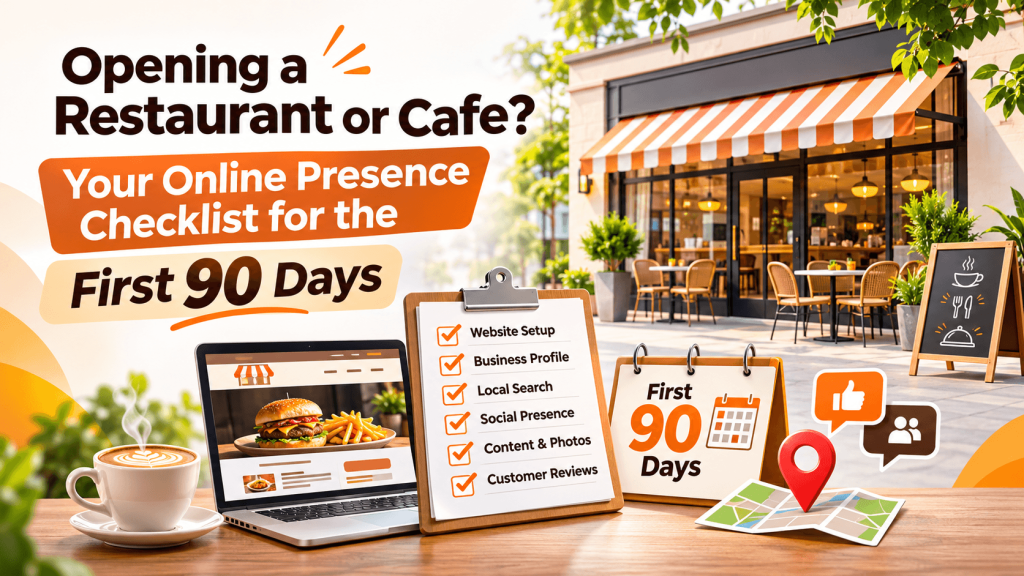
The espresso machine is installed, the menu boards are up, and the soft opening is two weeks away. Then the owner searches the cafe’s name and finds nothing but a permit notice and an old listing for the sandwich shop that used to occupy the space.
New food businesses often focus on the kitchen and forget that many first-time customers will look them up before they ever walk in.
Before Opening Day: Set the Foundation
Claim your Google Business Profile as early as the platform allows, and add your opening date, hours, and a few real photos of the space. Set up an Apple Business Connect listing so iPhone users see accurate details in Apple Maps.
Publish a simple website or landing page with your menu as text, not just an image. Text menus are easier for customers to read on phones and easier for search engines to understand. If the previous tenant’s listing still shows your address, report it as closed so it doesn’t confuse customers.
The First Month: Make Discovery Easy
Early customers decide quickly, often based on photos, hours, and a few reviews. Post updates when you add menu items or change hours during the first weeks, since new businesses frequently adjust schedules. Upload fresh photos of popular dishes and the dining room as you go, because customers want to see what the food and atmosphere actually look like.
This is also a good time to add your restaurant to relevant online business directories. RealDir’s Food and Drink directory is one place where local diners can find your cuisine, location, and contact details alongside other neighborhood spots. Use the same business name, phone number, and address you used everywhere else.
Months Two and Three: Build Momentum
Ask satisfied guests for reviews with a small table card or a link on receipts. Respond to early feedback, especially complaints, since new restaurants are often judged by how they handle mistakes.
Connect with your neighborhood too. Local food bloggers, community event pages, and nearby businesses can introduce you to customers who wouldn’t find you through search alone. A cafe near an office park, for example, might partner with nearby companies on catering for team meetings.
Conclusion
Your online presence opens before your doors do. Set up accurate profiles early, keep details current as your schedule settles, and add your restaurant to trusted local directories such as RealDir. Small, steady steps in the first 90 days make it much easier for hungry neighbors to find you.
Frequently Asked Questions
When should a new restaurant create its Google Business Profile?
Create it as soon as you have a confirmed address and signage, and add your future opening date if the option is available. This lets customers find you during construction and soft opening. Verify the profile early, since verification can take time and sometimes requires extra steps.
Should my restaurant menu be a PDF or a web page?
A web page is usually better. HTML text loads quickly on phones, is easier to read and update, and helps search engines understand what you serve. You can still offer a downloadable PDF for printing, but make the web page version the primary menu.
How do I handle an old listing from the previous business at my address?
Search for your address on major map platforms and directories. Where the old business still appears as open, use the platform’s option to report it as closed or moved. This prevents customers from confusing your restaurant with the former tenant.
Are food delivery apps enough for a new restaurant’s online presence?
Delivery apps help with orders, but they don’t replace your own website, map listings, and directory profiles. Customers often check several sources before choosing a place to eat, and your own channels let you control your menu, hours, and brand story directly.

admin
We help consumers find and connect with trusted local businesses, and help businesses amplify their online visibility.